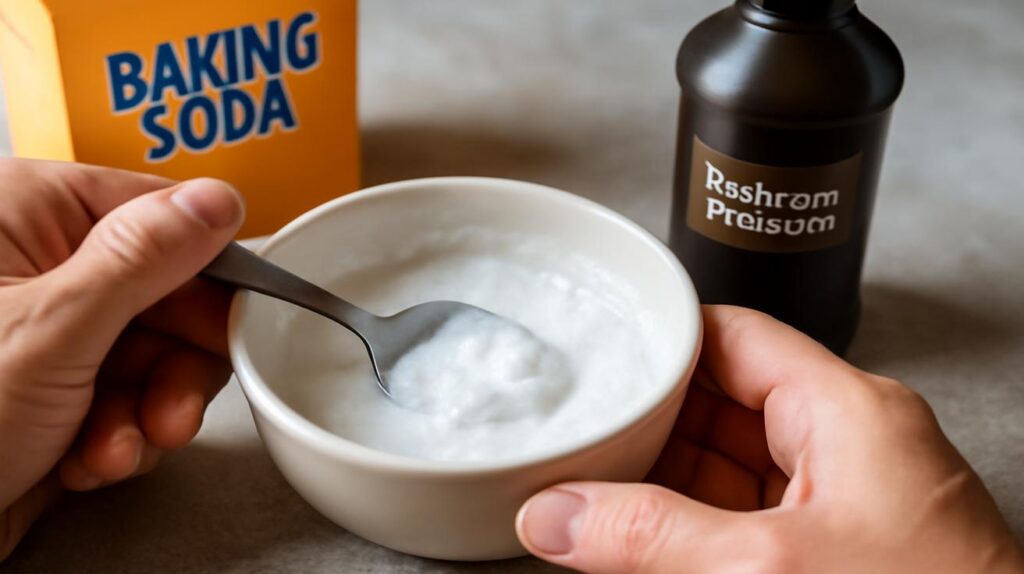
The first time you mix baking soda with hydrogen peroxide, it feels a little like performing kitchen alchemy. A spoonful of ordinary white powder, a splash of clear liquid from a brown bottle, and then—bubbles, foam, a quiet fizzing that sounds like a tiny rainstorm on the surface of a plate. It doesn’t smell harsh, it doesn’t sting your eyes, and yet, moments later, that grimy grout line or stained baking tray starts to look…different. Cleaner. Brighter. As if something stubborn has finally let go.
The Quiet Science Happening in Your Bowl
Before it ever scrubs a sink or polishes a smile, the magic of this duo starts in the smallest places: at the molecular level. You don’t see it, but every bubble, every hiss of foam is chemistry unfolding in real time on your kitchen counter.
Hydrogen peroxide (H₂O₂) is often described as “water with an extra oxygen,” and while that’s an oversimplification, it’s a helpful mental picture. That extra oxygen is unstable and eager to escape. When hydrogen peroxide breaks down, it turns into plain water (H₂O) and oxygen gas (O₂). The tiny bubbles you see in a poured cut or on a countertop stain? That’s oxygen leaving the party.
Baking soda, sodium bicarbonate (NaHCO₃), is a mild alkaline substance. It’s non-corrosive to most surfaces but still powerful enough to nudge molecules in new directions. When you combine baking soda and hydrogen peroxide, you’re not creating an explosive or dangerous reaction. Instead, you’re building a gentle, activated cleaning paste. The baking soda acts like a supportive scaffold: it thickens the liquid, slightly increases the pH, and offers fine, soft grit to physically lift stains while the peroxide breaks them down chemically.
The result: a mixture that sticks where you put it, scrubs without scratching most surfaces, and uses oxygen to attack discoloration and organic gunk. Gentle enough for everyday cleaning, strong enough to feel like you’re wielding something much more serious.
Why This Combo Works So Well Around the House
If you’ve ever stood in the cleaning aisle, overwhelmed by neon labels and impossible promises, the simplicity of two familiar ingredients is comforting. But this isn’t just about nostalgia or “going natural.” There are clear reasons people reach for baking soda and hydrogen peroxide together—and keep coming back.
1. A Stain Fighter That Acts Like a Detective
Stains, whether in your oven or in your bathroom, are often made of complex organic molecules: charred food, soap scum, mildew, body oils. Hydrogen peroxide releases oxygen, which helps break apart the chemical bonds in some of these stains, especially those with color. The baking soda paste helps hold the peroxide exactly where you need it—on that patch of grout, beneath the burner grate, across the bottom of a stained mug.
Because the mixture foams and fizzes, it can creep into small crevices: the lines between tiles, the textured floor of a bathtub, the curves of a baking sheet that never quite comes clean. You can almost see it working as tiny bubbles crawl along the surface, lifting stubborn grime out of hiding.
2. Gentle Abrasion Without Harsh Scratches
Run baking soda between your fingers and you’ll notice something: it feels soft, almost silky, not like sharp grains of salt or sand. That’s because its particles are small and relatively soft, making it an excellent mild abrasive. When combined with the foaming action of hydrogen peroxide, you get a paste that can scrub away residue and surface stains without gouging metal or stripping enamel.
Think of it as a tiny, cooperative army: oxygen molecules prying stains apart from the inside, micro-particles of baking soda nudging the loosened debris off the surface. This is especially useful for things you don’t want to treat roughly—ceramic dishes, light-colored grout, enamel cookware, and even some parts of your bathroom fixtures.
3. Cleaner Air, Fewer Harsh Fumes
One of the underappreciated pleasures of cleaning with baking soda and hydrogen peroxide is what you don’t smell. No heavy chlorine fumes, no burning sensation at the back of your throat. Hydrogen peroxide has a faint, clean scent, and baking soda is almost odorless. For many people, especially those sensitive to strong fragrances, this mixture offers a way to tackle tough jobs without feeling like they need to step outside and gasp for air.
Of course, “gentle” doesn’t mean risk-free. Hydrogen peroxide still needs to be handled with respect, especially at higher concentrations. But in the common 3% solutions usually found in brown pharmacy bottles, it’s a mild yet effective cleaning partner when used correctly—and baking soda helps tame it even further by turning it into a paste that doesn’t splash or drift in the air as easily.
Everyday Uses: From Kitchen Sinks to Quiet Smiles
Once you get comfortable mixing these two, they start to show up everywhere in your home. You find yourself reaching for the same two containers in situations where you once felt defeated by stains, smells, and dull surfaces.
Bringing Old Bakeware Back to Life
There’s a particular heartbreak in pulling out a beloved baking sheet or casserole dish and realizing it no longer looks clean—even after you’ve scrubbed until your arms ache. Streaks of brown, stuck-on grease, a permanent-looking shadow of past roasts and cookies. This is where the mixture shines.
You sprinkle baking soda over the stained areas, drizzle hydrogen peroxide on top, and, if you want, add another light dusting of baking soda. The paste slowly forms and begins to fizz, clinging to the most stubborn spots. You leave it to sit, then return with a sponge. The difference is often startling: baked-on residue softens, dark stains lighten, and the surface regains some of its old brightness. You didn’t boil it, scrape it with metal, or drown it in toxic-smelling solutions. You just let a quiet chemical partnership do its work.
Making Grout Look Almost New
Tile grout tells the story of a home. Cooking splatters, steam, dust, humidity—over time, all of it settles into those pale lines between tiles. What once looked clean and crisp slowly turns dingy, then gray, then almost brown. Many people resign themselves to “old grout” as if it’s a permanent condition.
Enter your two-ingredient paste. You apply it along the grout lines with an old toothbrush or a small cleaning brush. The baking soda settles in, the hydrogen peroxide begins its gentle fizzing, and together they work into the porous surface. After a brief wait and a bit of scrubbing, dirty water runs down the tile, and the grout beneath looks brighter, lighter, and closer to the color it used to be. It’s not always a perfect restoration, especially on very old or stained grout, but the transformation is often dramatic enough to feel like you’ve replaced tiles rather than just cleaned them.
Dealing With Stubborn Bathroom Build-Up
Soap scum has a particular feel under your fingers: slick and sticky, yet oddly resistant to normal cleaning. Film on a tub, a haze on shower doors, a ring inside a sink—it all seems to cling more tightly, the more you scrub with just water and dish soap.
A baking soda and hydrogen peroxide paste grips that film and slowly breaks it down. On glass, it can help remove the dull, foggy coating that makes a shower door look perpetually dirty. On tubs and sinks, the paste adds some welcome scrubbing power without gouging the surface. You rinse it away and notice your reflection coming back clearer on glass, and surfaces feel smoother and cleaner under your hand.
Beyond Cleaning: Teeth, Laundry, and Little Experiments
The reach of this mixture extends beyond tile and cookware. In bathrooms, laundry rooms, and even in everyday routines, it plays quieter but still important roles.
A Whitening Boost for Teeth (Used Carefully)
Many people have tried brushing with a tiny dab of baking soda and hydrogen peroxide paste to brighten their teeth. The logic makes sense: peroxide has long been used in whitening gels, and baking soda offers both mild abrasiveness and a slightly alkaline environment that helps disrupt plaque.
The key word here is “tiny.” A small amount, used occasionally and gently, may help remove surface stains from coffee, tea, or wine. The bubbles can feel oddly satisfying, a miniature cleaning session right in your mouth. But it’s crucial not to overdo it. Too much abrasion or frequent use can wear down enamel and irritate gums. Think of it not as a replacement for toothpaste, but as an occasional touch-up, best discussed with a dentist if you plan to use it regularly.
Helping Laundry Smell Truly Clean
Some fabrics develop a kind of deep-set odor that regular detergent barely touches. Workout clothes, damp towels forgotten in a basket, or items that lived too long in a poorly ventilated closet. Here again, hydrogen peroxide and baking soda can help.
Hydrogen peroxide acts as a mild bleaching and deodorizing agent, and baking soda can help neutralize acids and odors. When used appropriately with your detergent, they can freshen loads that resist fully smelling clean. Light-colored items with sweat stains may brighten. Musty towels sometimes lose that faint, unpleasant smell that lingers even after washing.
Small Household “Experiments” That Become Habits
Once these two bottles are in regular use, small experiments start to feel natural. You add a bit of the mixture to a stained mug and watch tea rings disappear. You dab a paste onto the inside of a white sneaker and gently scrub away marks. You freshen a cutting board after handling strong-smelling foods, letting the paste sit briefly before rinsing. Over time, these little tests become part of your cleaning routine, and you start moving more confidently with just a handful of trusted, simple ingredients.
How to Mix It: Ratios, Timing, and Safety
It’s tempting to think “more is better,” but one of the quiet strengths of this mixture is how well it works even in modest amounts. You don’t need complex recipes—just a bit of attention to texture and timing.
| Use | Approximate Ratio (Baking Soda : 3% Hydrogen Peroxide) | Texture Goal |
|---|---|---|
| Grout & tile paste | 2–3 parts : 1 part | Thick, spreadable paste that clings |
| Baking sheet & cookware | 2 parts : 1 part | Creamy, slightly foamy paste |
| Bathroom surfaces | 1.5–2 parts : 1 part | Spreadable, not runny |
| Occasional tooth paste* | 1 part : 1 part (very small amount) | Soft, smooth, no large grains |
*Always use food-grade baking soda and 3% hydrogen peroxide, in a very small amount, and consult a dentist before frequent use.
The process itself is satisfyingly simple. You pour a little hydrogen peroxide into a small bowl, then slowly stir in baking soda until it reaches the thickness you want. You’ll notice it starts to bubble right away; that’s your cue that the clock has started. This is not a mixture to make in batches and store. Over time, hydrogen peroxide breaks down, and the oxygen it releases escapes into the air. A paste that sits too long in a jar becomes mostly water and baking soda—less effective and not worth the effort of saving.
A few safety notes fit naturally into this picture. Stick to the common 3% hydrogen peroxide for household use unless a professional has advised otherwise. Keep it away from eyes and avoid swallowing it. Wear gloves if you’re cleaning for a long time or have sensitive skin. And never mix hydrogen peroxide with vinegar or strong commercial cleaners in a closed container; different combinations can create irritating or harmful fumes. Baking soda plus hydrogen peroxide, used simply, is more than enough for most of the jobs it’s meant to do.
Knowing When Not to Use It
No matter how versatile a mixture is, there are times it’s better left in the bowl. Part of using it well is knowing when to set it aside.
Delicate natural stones—like marble, some types of granite, and travertine—often react poorly to acidic or strongly alkaline products. While baking soda is only mildly alkaline, repeated use can dull or etch these surfaces. Hydrogen peroxide may also lighten certain natural materials in ways you don’t want. On finished wood, fine furniture, or specialty coatings, it’s safer to test in an inconspicuous spot or choose gentler, manufacturer-recommended cleaners.
On fabrics, especially dark or richly colored ones, hydrogen peroxide can sometimes act like a mild bleach. Before you dab it onto a stain, test it on a hidden seam or inner hem and let it dry. If the color stays true, you can proceed more confidently. If it fades, the fabric is telling you to try something else.
And as easy as it is to love the idea of “natural whitening,” using this paste too frequently on teeth or gums can cause more harm than help. Enamel doesn’t grow back. A sparkling smile is less important than a strong one.
A Small Ritual of Control in a Messy World
There’s something grounding about walking into a room that feels irredeemably dirty—a ring in the tub, a pan black with old meals, tiles dulled by the slow creep of time—and knowing that, with two ordinary ingredients, you can at least begin to reclaim it. You’re not promising perfection. You’re not erasing years in a single swipe. But you’re doing something that works, that you understand, and that doesn’t fill your home with complicated warnings and sharp chemical smells.
The partnership between baking soda and hydrogen peroxide is humble, almost unremarkable at first glance. No bright branding, no dramatic labels. Just a cardboard box and a brown bottle, maybe shoved to the back of a cabinet. Yet together, they offer a kind of quiet power: the ability to coax brightness back into familiar things, to dissolve what clings, to soften what feels permanently stuck.
In a world full of aggressive solutions and single-use promises, there’s a rare comfort in stirring these two together, listening to that gentle fizz, and knowing that something small and unseen is already at work, helping your home breathe a little easier.
FAQs About Mixing Baking Soda with Hydrogen Peroxide
Is it safe to mix baking soda and hydrogen peroxide?
Yes, for most everyday uses it’s safe to mix baking soda with 3% hydrogen peroxide. The reaction is mild and mainly releases oxygen. Use common-sense precautions: avoid contact with eyes, don’t ingest it, wear gloves if you have sensitive skin, and keep out of reach of children and pets.
Can I store the mixture for later use?
It’s best to mix only what you need and use it right away. Hydrogen peroxide breaks down over time, releasing oxygen and losing effectiveness. A stored paste will mostly be baking soda and water, with much less cleaning power.
Will this mixture disinfect surfaces?
Hydrogen peroxide on its own has disinfecting properties when used correctly. When combined with baking soda, it can still help reduce germs, but it shouldn’t replace dedicated disinfecting steps where strict hygiene is required. For high-risk situations, follow health guidelines for proper disinfection.
Can I use it on any surface?
No. Avoid or use great caution on natural stone (like marble or some granite), delicate finishes, dark or easily faded fabrics, and certain metals that may discolor. Always test in an inconspicuous area first.
Is it okay to brush my teeth with baking soda and hydrogen peroxide?
Occasional, gentle use of a small amount may help remove surface stains, but overuse can damage enamel and irritate gums. If you’re considering using it regularly, it’s wise to talk with a dentist to make sure it’s appropriate for your teeth.
Does it work for mold and mildew?
Hydrogen peroxide can help lighten and reduce some mold and mildew on non-porous surfaces, and baking soda adds scrubbing ability. However, deeper or widespread mold problems, especially in porous materials, may require professional treatment and more specialized methods.
Can I mix hydrogen peroxide with vinegar or other cleaners instead?
Hydrogen peroxide should not be mixed in the same container with vinegar or strong chemical cleaners. Certain combinations can create irritating or potentially harmful fumes. If you use different cleaners, use them separately with thorough rinsing and ventilation in between.